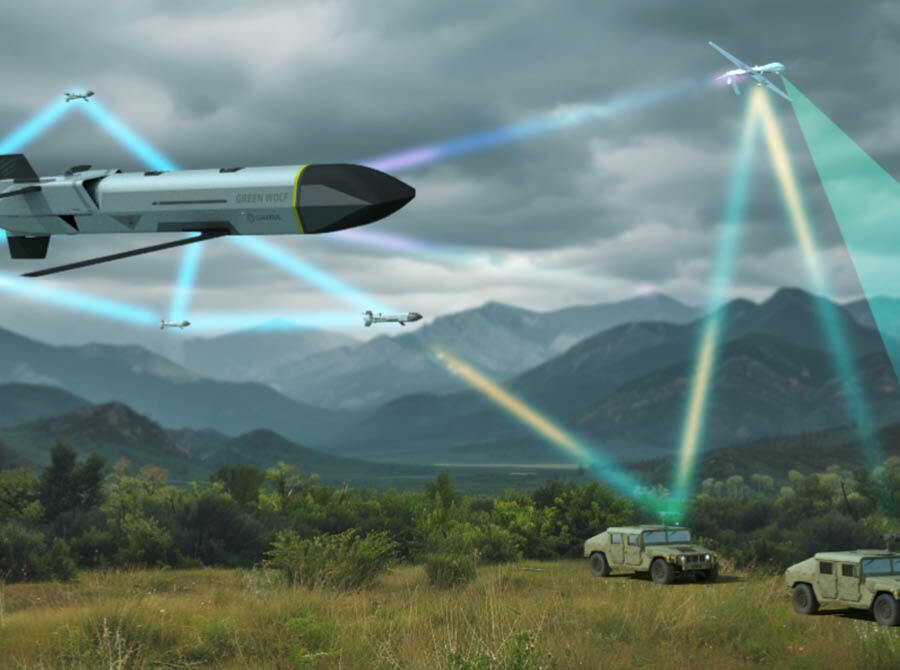
L3Harris Technologies and Shield AI flew the first autonomous electronic warfare mission on a live test range in July 2026, supported by the U.S. Army. Unmanned aircraft systems detected and characterized electromagnetic threats, shared data through L3Harris's DiSCO battle-management network, and used Shield AI's Hivemind autonomy software to autonomously reroute follow-on aircraft around threat zones — no human in the loop.
The test integrated L3Harris's software-defined Deceptor EW payload across multiple drones and deployed the Green Wolf launched-effects platform carrying both sensing and electronic-attack capabilities. Hivemind processed threat data from DiSCO in real time and commanded aircraft maneuvers autonomously, validating what L3Harris calls "campaign-speed" decision-making in contested electromagnetic environments.
This follows a simulated test in February 2026 and positions both companies to expand autonomous EW at the tactical edge. The pairing of advanced spectrum sensing with onboard AI decision-making addresses a critical gap: legacy EW systems rely on human operators to interpret threats and issue commands, creating latency in fast-moving engagements. Autonomous systems compress that cycle to seconds.
The defense market for autonomous EW is accelerating as near-peer adversaries deploy sophisticated jamming and spoofing capabilities. L3Harris and Shield AI are betting that open-architecture autonomy — where third-party payloads and mission software can plug into platforms like Green Wolf — will become the standard for distributed operations. Competitors including Anduril, Kratos, and AeroVironment are pursuing similar autonomy-first architectures.