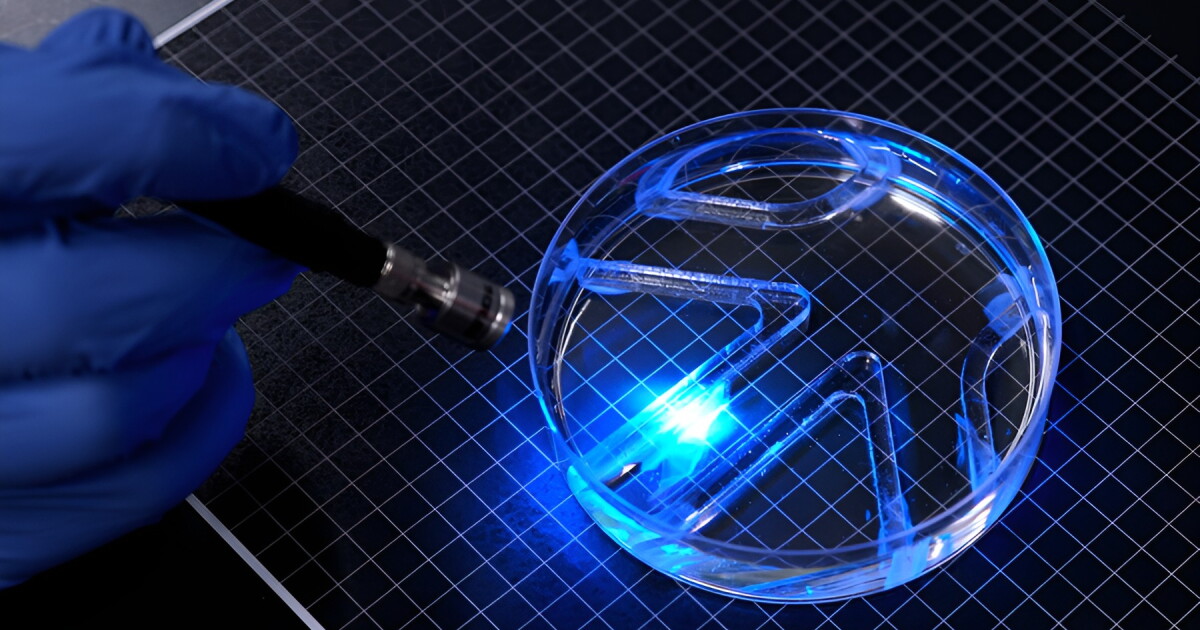
MIT's biohybrid swimmer measures 15mm long and uses genetically engineered muscle cells attached to a gelatin-based gel. When light hits one of its two fins, the muscle contracts and the fin beats. Alternating light between fins produces forward motion and steering without onboard electronics.
The breakthrough is in the construction. Earlier designs used thick 3D muscle blocks requiring millions of cells. MIT's team achieved movement with a single-layer design by stamping grooves into the gel surface to align muscle fibers and applying a daily light-stimulation training regimen. This increased fin displacement fourfold compared to unstimulated controls.
Performance remains modest — the robot swims at four body lengths per minute, compared to 15.6 for competing designs like OstraBot. Navigation is entirely external: a researcher steers it through a Petri dish maze with a handheld light. The muscle tissue stayed functional for over 30 days without anchoring.
The thin architecture could reduce manufacturing costs and improve efficiency compared to bulkier biohybrid robots. MIT envisions deployment in fragile or unpredictable environments where living tissue's ability to sense surroundings and self-heal offers advantages over conventional hardware. The next step is integrating multiple cell lines and more complex fiber orientations to produce stronger, more autonomous movement.