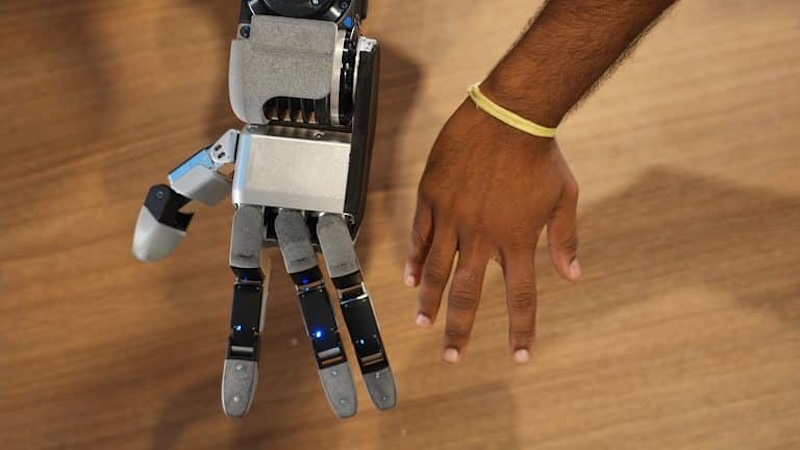
Boston Dynamics unveiled a four-finger hand for Atlas with 13 degrees of freedom — three per finger plus a four-DOF opposable thumb that slides along both axes to form different grip configurations. The hand incorporates dense pressure sensors and backdrivable actuators designed to support both force regulation and high-fidelity simulation for reinforcement learning.
The company deliberately chose four fingers over five after internal testing showed minimal functional loss. CTO Zack Jackowski had team members tape their pinky and ring fingers together for a day to assess which tasks became impossible. The result: eliminating the pinky saves three actuators, reduces cost and volume, and cuts failure modes without sacrificing industrial tool operation or in-hand reorientation.
Atlas is intended for structured industrial environments where tool use matters more than biomimetic design. The hand can operate drills, nail guns, grinders, and welding torches while maintaining grip strength comparable to Atlas' previous seven-DOF hands — which previously carried 100+ lb loads including a minifridge.
Boston Dynamics has demonstrated initial sim-to-real transfer using reinforcement learning trained entirely in simulation, then deployed on Atlas hardware using high-rate proprioceptive feedback. The rigid-drive actuation and control systems are designed to reproduce physical behavior with high fidelity in sim, enabling policy training across varied friction, torque, and disturbance parameters before real-world deployment.
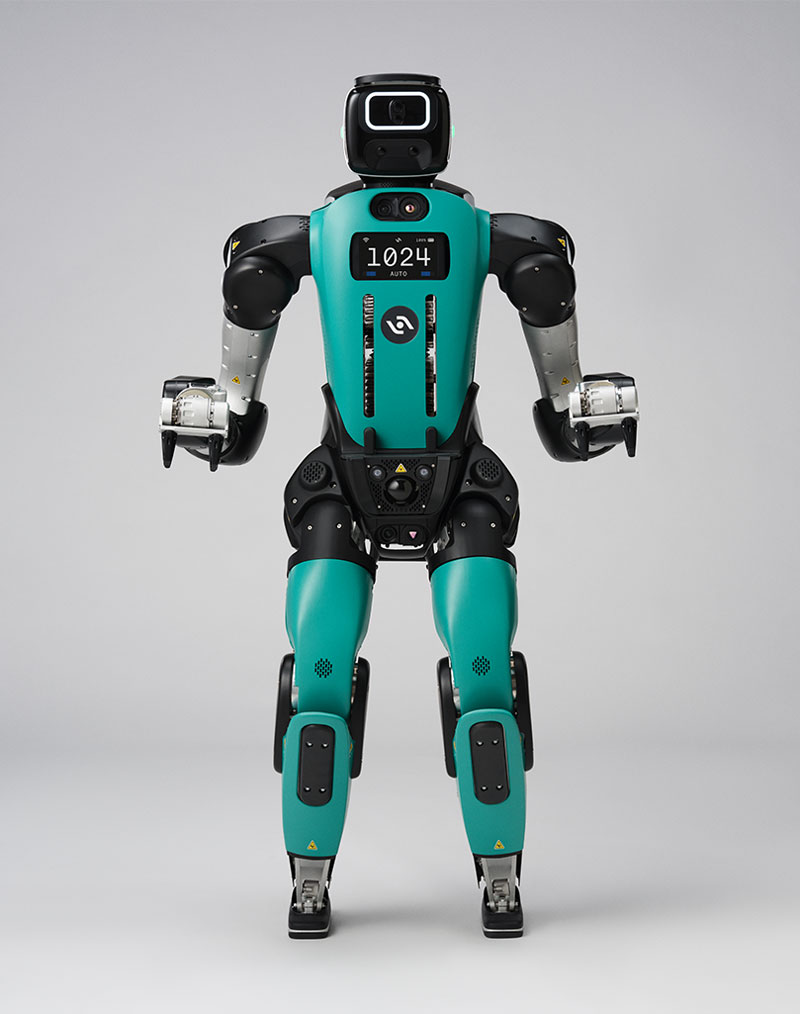
The hand accompanies the latest electric Atlas platform, which Boston Dynamics is positioning for large-scale manufacturing deployment. Tool use is framed as a capability multiplier — extending the robot's range without requiring the hand itself to perform every task directly.