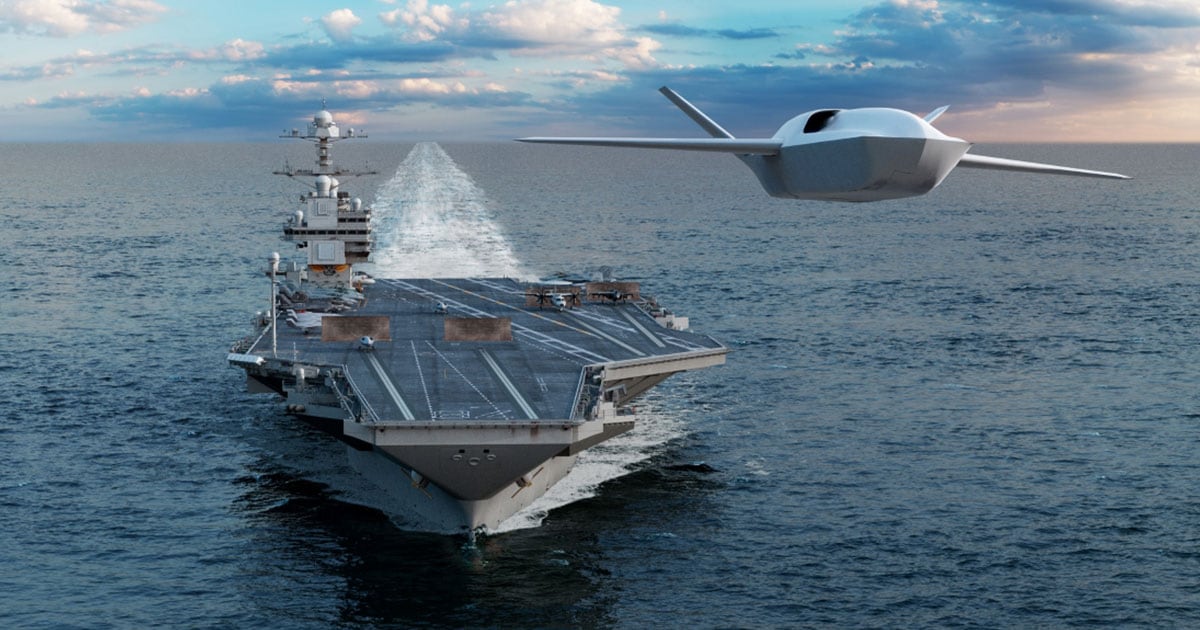
The Navy's Aug. 31 RFI for carrier-based CCA defines performance targets: 5-ton weapons payload (four external hardpoints at 2,500 lbs each), catapult launch and arrested landing capability up to Sea State 5, and compatibility with existing carrier elevators and hangar bays. Responses are due Sept. 18, with two prototypes required within three years.
The platform must operate via the MD-5 Unmanned Carrier Aviation Mission Control System already supporting MQ-25 Stingray, with no additional flight deck personnel or specialized handling equipment. Deck footprint must not exceed fourth-generation fighters. The design prioritizes integration over disruption — no carrier modifications required.
The $30M unit cost target has doubled from the Navy's 2024 estimate of $15M, reflecting the realities of carrier qualification and autonomy integration at scale. The shift signals acknowledgment that "attritable" does not mean disposable when operating from a $13B nuclear carrier.
Mission scope includes single- and multi-aircraft strike operations in contested environments where human pilot risk is unacceptable. The Navy frames CCA as capacity insurance against "high cost and extended timelines required to replace manned platforms" — a hedge against attrition in peer conflict scenarios.
Conceptual designs from Anduril and General Atomics suggest scaled-down stealth fighter profiles. The Navy wants alternatives for EMCON-condition deck handling systems operable without additional personnel — automation extending from flight operations to deck logistics.