Topic
Policy
11 articles tagged with this topic
A3 completes industrial mobile robot safety standard with Part 3
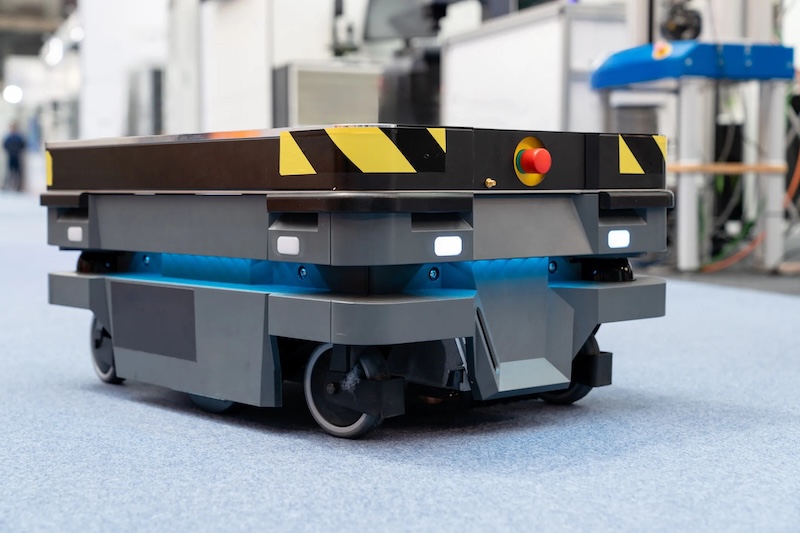
The Association for Advancing Automation (A3) has published ANSI/A3 R15.08-3-2026, completing a three-part safety standard for industrial mobile robots (IMRs). Part 3 addresses user responsibilities during day-to-day operations, including risk assessment, employee training, and periodic inspections throughout the machinery lifecycle.
Anscer Robotics secures FCC conditional approval for US AMR sales
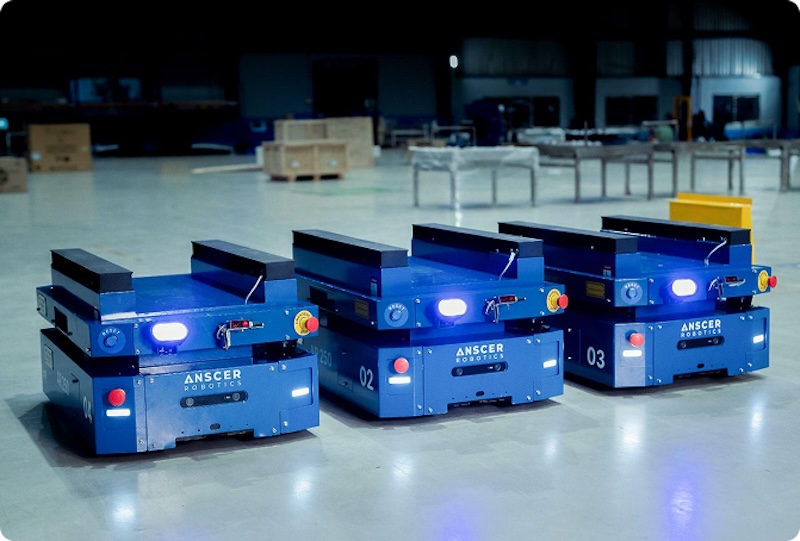
Anscer Robotics received FCC Conditional Approval for its AR250, AR650, and AR1250 autonomous mobile robots on September 18, 2026, under the Commission's Covered List program for foreign-produced advanced robotic devices. The approval is a transitional authorization requiring ongoing US manufacturing commitments and supply-chain transparency — placing Anscer among the first robotics companies to navigate the FCC's new communications supply-chain security framework for robotic systems.
US and Russia block UN talks on autonomous weapons regulations
The US and Russia have proposed late changes to a draft text at UN talks in Geneva that would establish a path toward regulating Lethal Autonomous Weapons Systems (LAWS), raising doubts that the 128 countries meeting under the Convention on Certain Conventional Weapons will reach agreement. The US position has hardened over the past six months, favoring non-binding guidelines over a legally binding treaty, while countries including Brazil, Ireland, and several African states push for enforceable safeguards requiring meaningful human control over autonomous weapons.

Germany blames Russia for failed drone attack on Leipzig airport
Germany has formally attributed an August 4 failed drone attack on Leipzig/Halle Airport to Russia, citing intelligence findings and attack patterns. The explosive-laden drone fell near a Ukrainian cargo plane used for munitions transport but failed to detonate; two similar drones were found at the site in subsequent weeks. Berlin's response includes closing Russia's Bonn consulate, terminating cultural center leases, and implementing stricter visa controls for Russian nationals.

RoboStore spins out Robo Inc. for U.S.-assembled robots
RoboStore, the primary U.S. distributor for China-based Unitree Robotics, has launched Robo Inc., a domestic manufacturing and integration subsidiary focused on U.S.-assembled robotic systems. The move addresses growing demand for localized production, data sovereignty, and compliance amid mounting trade restrictions on foreign robotics platforms.

Pentagon-blacklisted Chinese lidar maker expands US reach via Nvidia partnership
Hesai Technology, a Shanghai-based lidar manufacturer blacklisted by the US Department of Defense as a Chinese military entity, is expanding its presence in US autonomous systems through partnerships with Nvidia, Amazon's Zoox, and other major players. Security experts warn that Chinese-made lidar sensors collecting precise 3D environmental data could enable Beijing to access sensitive infrastructure information or remotely disable critical systems, though Hesai's CEO denies the company poses any security risk.

UN adopts first global regulation for fully autonomous vehicles
The UNECE World Forum for Harmonization of Vehicle Regulations has approved the first international framework governing fully autonomous driving systems (ADS), ending a decade of regulatory fragmentation. The regulation mandates lifecycle safety management, credible testing environments, structured safety cases, and continuous real-world monitoring — backed by the US, China, EU, Japan, Canada, and the UK.

Senate bill authorizes DOD to create autonomous systems combatant command
The Senate Armed Services Committee's FY2027 defense bill authorizes the Pentagon to establish a Robotic and Autonomous Systems Combatant Command, led by a four-star general with special acquisition and test authorities. The move responds to persistent delivery failures in programs like Replicator and aims to centralize drone procurement and force generation before transitioning capabilities back to the services.
Senate bill proposes National Commission on Robotics
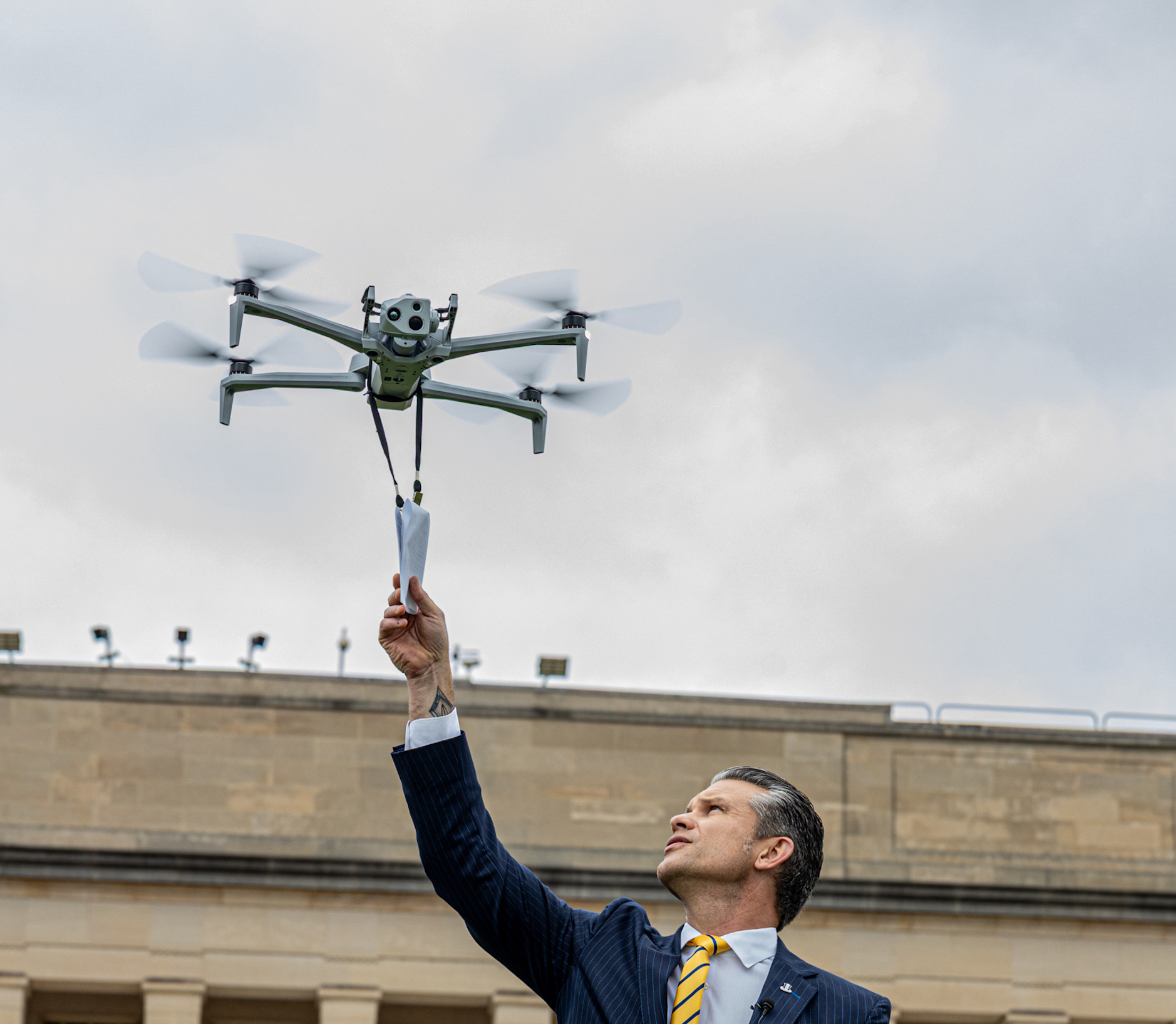
Senators from both parties introduced a bill to establish an independent National Commission on Robotics to assess U.S. competitiveness and recommend federal policy. The commission would evaluate workforce development, supply chain risks, and strategic partnerships — addressing growing concern that the U.S. lacks a coordinated robotics strategy while China accelerates deployment.

China launches national humanoid robot tracking platform in Beijing
China has launched its first national lifecycle management platform for humanoid robots, giving each unit a unique digital identity for end-to-end tracking from production through recycling. The system, overseen by the Ministry of Industry and Information Technology's Standardization Technical Committee, is designed to ensure traceability, strengthen supply chain oversight, and establish accountability across the humanoid robotics sector.

ISO's home robot safety standard revision ignores user input
The International Standards Organization is finalizing an update to ISO 13482, the 12-year-old safety standard for personal care robots, as humanoid robots move from labs into homes. South Korean researcher Jae-Seong Lee argues the revision acknowledges bidirectional human-robot interaction risks but fails to establish binding compliance criteria, test methods, or enforcement mechanisms — and crucially excludes the elderly users most affected by these systems from the standards development process.
